Latest Blog
Resume Fraud: 15 Red Flags and How to Verify Employment History Fast
Researcher
•
5 min read
Share this post


Resume Fraud: 15 Common Red Flags and How to Verify Employment History Fast
Hiring teams are spending more time than ever sorting signal from noise. Resume fraud is part of why.
Some of it is old-school exaggeration. Some of it is modern. AI-generated resumes, fake references, proxy interviewing, and real-time coaching during screening calls.
If you want to reduce risk without slowing down hiring, the answer is not a heavier process for every candidate. It is a consistent baseline check for everyone, plus a fast escalation path when something looks off.
This guide covers the most common resume fraud red flags and a practical playbook to verify employment history fast for both SMB and enterprise teams.
Table of contents
What counts as resume fraud
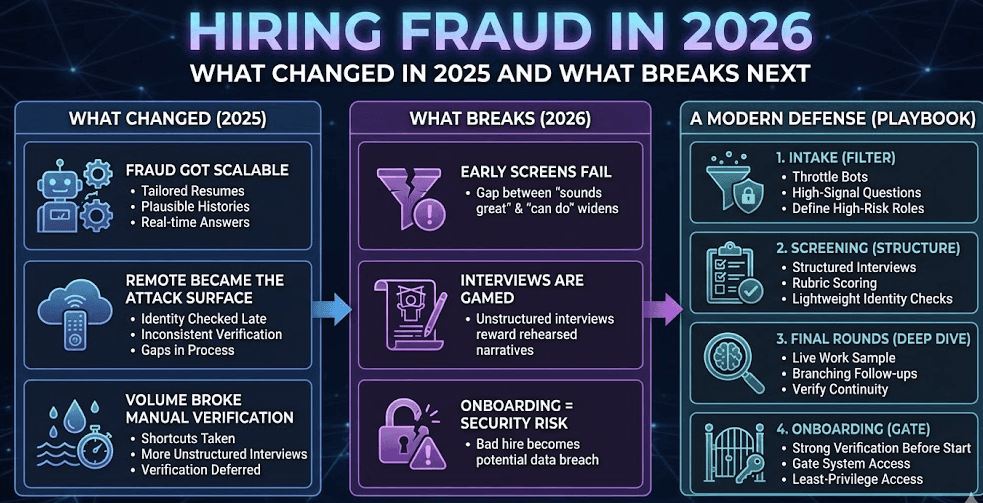
The 2-speed verification model
15 common resume fraud red flags and how to verify each
How to verify employment history fast
Templates you can copy and paste
How Tenzo helps reduce resume fraud risk
FAQ
What counts as resume fraud
Resume fraud is any intentional misrepresentation that could change a hiring decision. The most common forms include:
Fabricated employers or roles
Inflated titles, seniority, or responsibilities
Adjusted dates to hide gaps or short tenures
Misrepresented education, licenses, or certifications
Invented outcomes, metrics, or leadership claims
Impersonation, proxy interviewing, or real-time cheating during interviews
Not every inconsistency is fraud. People forget exact months. Titles vary by company. Teams rename. What matters is pattern, severity, and whether the story stays stable when you ask follow-up questions.
The 2-speed verification model
Most hiring processes fail in one of two ways.
They do heavy checks on everyone, which slows down the funnel and annoys good candidates.
They do almost no checks until the end, which causes late-stage surprises.
Use a two-lane model instead.
Speed lane: a baseline check for every finalist
Verify a minimum viable set of facts:
Employer name
Start and end month and year
Most recent title
One reference who actually worked with the candidate
Highest required credential for the role
Deep lane: escalate when risk is higher or red flags cluster
Escalate when:
The role has privileged access, financial authority, regulated responsibilities, or high security risk
The candidate is remote and identity risk is higher
You see multiple inconsistencies across resume, LinkedIn, and interviews
You suspect impersonation or real-time assistance during screening
Tenzo is designed for this exact model. You can keep your speed lane fast while adding lightweight integrity checks earlier in the process. If those checks look clean, you move on. If not, you escalate with confidence.
15 common resume fraud red flags and how to verify each
Below are 15 resume fraud patterns hiring teams run into most often, plus the quickest way to verify employment history and work claims.
1) Dates change across sources
What it looks like: Resume says "2021 to 2023" but LinkedIn says "2022 to present" or the months keep shifting.
Verify fast: Ask for exact start and end month and year in writing, then confirm through the employer's official verification channel.
2) Overlapping full-time roles that do not add up
What it looks like: Two "full-time" jobs in the same months, both described as high-intensity leadership roles.
Verify fast: Ask whether one role was part-time or contract. Validate the timeline with at least one employer or staffing agency.
3) Title inflation that does not match scope
What it looks like: "Director" or "VP" title, but the candidate cannot describe team size, budget, or decisions they owned.
Verify fast: Confirm official title via employment verification. Ask who they reported to, who reported to them, and what they owned end-to-end.
4) Vague employers and repeated "stealth" claims
What it looks like: "Stealth startup" or "confidential client" appears multiple times, preventing verification.
Verify fast: Require the legal entity name under NDA if needed. If they cannot provide verifiable employer details, move to deep lane.
5) A consulting firm with no footprint
What it looks like: Multi-year consulting experience with no clients, no online presence, and no proof of paid work.
Verify fast: Ask for two client references and redacted proof of engagement, like invoices or a statement of work.
6) Perfect metrics with no mechanism
What it looks like: "Increased revenue 300%" or "saved $2M" without a baseline, timeframe, or explanation.
Verify fast: Ask for before and after numbers, timeframe, and the specific lever they pulled. Cross-check with a reference who can confirm impact.
7) References that are hard to validate
What it looks like: Every reference uses a personal email, refuses a live call, or gives generic endorsements.
Verify fast: Require at least one identity-validated reference, like a reference with a verifiable LinkedIn profile and a business email, or a call routed through a company main line.
8) Education claims are oddly worded or incomplete
What it looks like: School name but missing degree type, graduation date, or program details.
Verify fast: Ask for degree type and graduation date. Verify when education is a requirement for the role.
9) Certifications that do not match the timeline
What it looks like: Advanced certifications claimed too early, or without eligibility requirements.
Verify fast: Ask for credential ID. Verify directly with the issuing organization when possible.
10) Tool and system ownership claims that conflict with the role
What it looks like: Entry-level candidates claiming they owned global HRIS configuration, payroll, or security programs.
Verify fast: Ask what permissions they had, what artifacts they produced, and who else owned the system.
11) Rapid promotions without a coherent story
What it looks like: Multiple jumps like "analyst to director" in a very short window.
Verify fast: Confirm dates and titles, then ask for a manager reference who can confirm the promotion context.
12) Frequent short tenures framed as contract work
What it looks like: Many roles of three to four months, all labeled "contract" without agency or client details.
Verify fast: Ask for staffing agency names, recruiter contacts, and one assignment you can verify end-to-end.
13) A LinkedIn profile that looks newly constructed
What it looks like: Thin network, generic language, and a resume that reads like a template.
Verify fast: Ask for a live walkthrough of one project with constraints, decisions, and what they personally delivered.
14) Location details drift in a remote process
What it looks like: Time zone confusion, inconsistent phone patterns, evasive answers about where they are based.
Verify fast: Add lightweight location verification for remote roles. If the role has compliance or security risk, escalate to deep lane.
Tenzo helps here by confirming candidates are where they say they are, which reduces risk tied to sanctioned jurisdictions and misrepresented location.
15) Interview narrative does not match resume claims
What it looks like: The resume says they led X, but they cannot explain tradeoffs, sequencing, or key details.
Verify fast: Ask the same story twice. First high-level. Then step-by-step. If the details shift, escalate.
This is also where interview integrity matters. If a candidate is getting real-time help, answers often sound polished but thin, and the details fall apart under follow-ups.
How to verify employment history fast
A fast verification process is mostly about consistency and routing.
Step 1: Get consent and standardize what you verify
Pick a baseline for every finalist, then apply it consistently:
Employer, dates, title
One verifiable reference
Highest required credential
Consistency protects you and speeds up the workflow because your team is not reinventing the rules for each candidate.
Step 2: Use the fastest verification channel available
Most teams find the best order is:
Employer verification portal or official HR verification process
HR employment confirmation phone line or email
Staffing agency confirmation for contract roles
Candidate-provided documents only as a backup
Step 3: Decide what counts as a minor vs major discrepancy
Use simple statuses:
Verified, matches
Verified, minor discrepancy, note it
Unable to verify, note why and what you used instead
Major discrepancy, escalate
A "minor" discrepancy is often a month mismatch or a title variant like "Software Engineer" vs "Software Engineer II." A "major" discrepancy is usually employer mismatch, fabricated role, years off on dates, or inconsistent identity signals.
Step 4: Escalate only when the risk is real
Deep lane checks can include:
Two independent references
Education and credential verification
Work sample validation
Identity verification for remote processes
Interview integrity checks to reduce real-time assistance and proxy interviewing
Templates you can copy and paste
Employment verification email to HR
Subject: Employment verification request for [Candidate Full Name]
Hello,
I am verifying employment history for [Candidate Full Name], who has applied for a role at our company. The candidate has authorized this verification.
Could you please confirm:
Employment start date (month/year)
Employment end date (month/year) or whether currently employed
Most recent title
If you need a signed release, I can send it immediately.
Thank you,
[Your Name]
Candidate message to speed up verification
Hi [First Name],
We are moving you into finalist steps. We verify employment history for every finalist to keep the process consistent.
For [Company], what is the fastest verification path?
Employer verification portal, or
HR email or phone line that confirms dates and title
If the employer cannot verify, we may ask for a backup document like a redacted pay stub or offer letter.
Thanks,
[Your Name]
Reference call script: 5 questions that surface exaggeration
What was your working relationship with [Name], and when did you overlap?
What did they own day to day, in practical terms?
What is one project they led end-to-end?
What is one area they should improve?
Would you rehire them?
How Tenzo helps reduce resume fraud risk
Traditional employment verification is necessary, but it often happens late. By the time you discover a mismatch, you have already invested time in interviews, scheduling, and offer workflows.
Tenzo helps teams reduce resume fraud earlier by combining structured screening with fraud and integrity signals that are hard to fake.
Here are a few ways teams use Tenzo in practice:
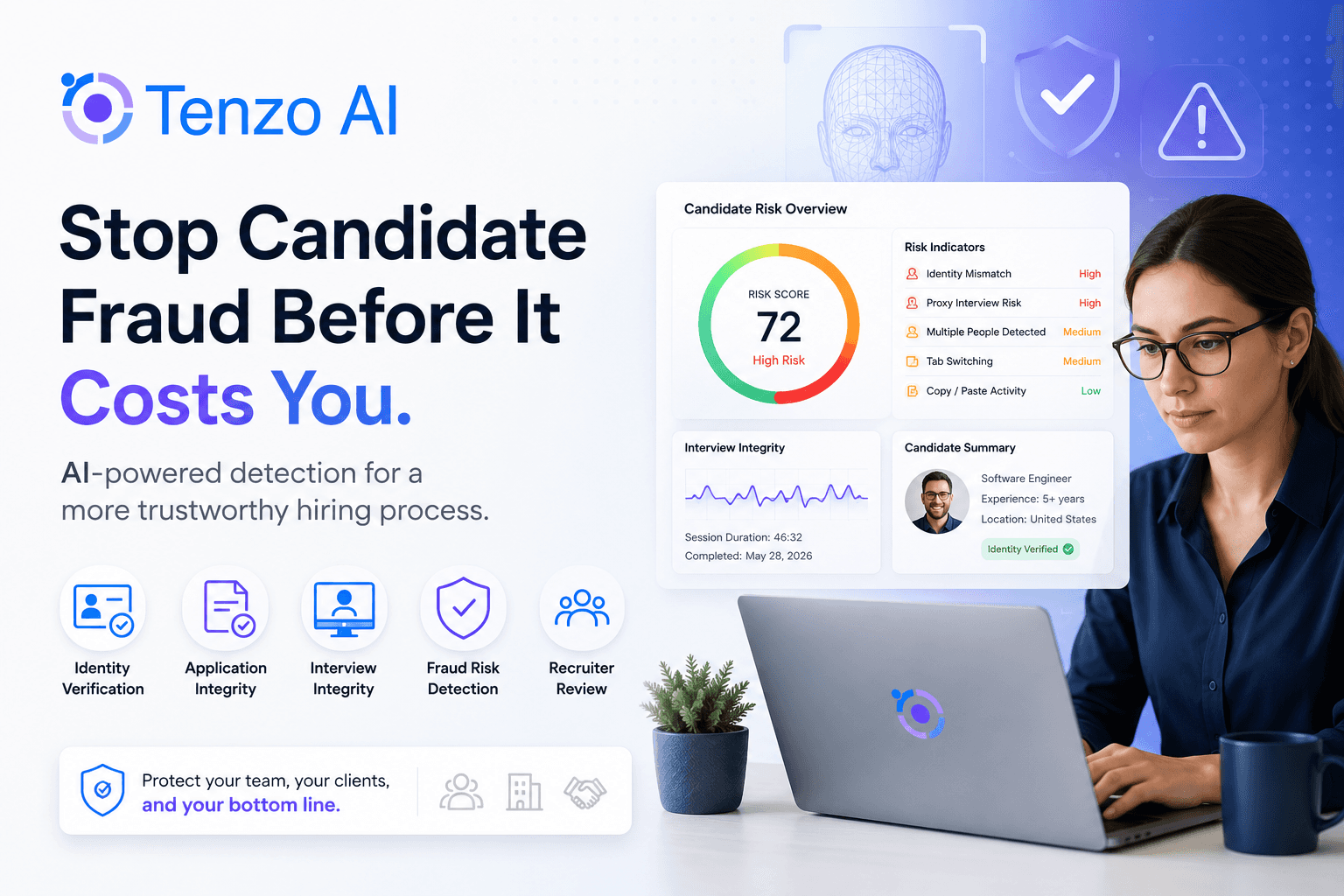
Confirm the candidate is the candidate. Tenzo can run identity verification where candidates hold up an ID, which helps prevent impersonation and proxy interviewing.
Reduce real-time cheating. Tenzo can detect interview patterns consistent with candidates using real-time AI assistance or other tools during screening.
Catch third-party help. Tenzo can flag signals consistent with someone else feeding answers off-camera.
Verify location for remote roles. Tenzo can confirm candidates are where they say they are, which reduces risk tied to misrepresented location and compliance constraints.
Spot risk patterns earlier. Tenzo uses many additional signals across email, phone, and resume behavior, which helps you decide when to stay in the speed lane and when to escalate to deep lane.
The result is a cleaner funnel. Your team spends more time with real candidates and less time discovering problems late.
If you want to see how this works in your process, book a demo or consultation here: https://www.tenzo.ai/contact-us
FAQ
What is the fastest way to verify employment history?
Use the employer's official verification channel, then triangulate with one identity-validated reference. Keep the baseline consistent, then escalate only when risk is higher.
Should we verify employment history for every hire?
Yes, at a consistent baseline. That prevents bias, speeds your workflow, and reduces late-stage surprises.
How do we avoid making candidates feel accused?
Standardize the step. Tell candidates you verify these items for every finalist. It feels routine rather than personal.
What is the biggest mistake teams make with resume fraud?
Waiting until the end. Fraud is cheaper to catch early, before scheduling cycles and final interviews.